Power steering in our Buggies…
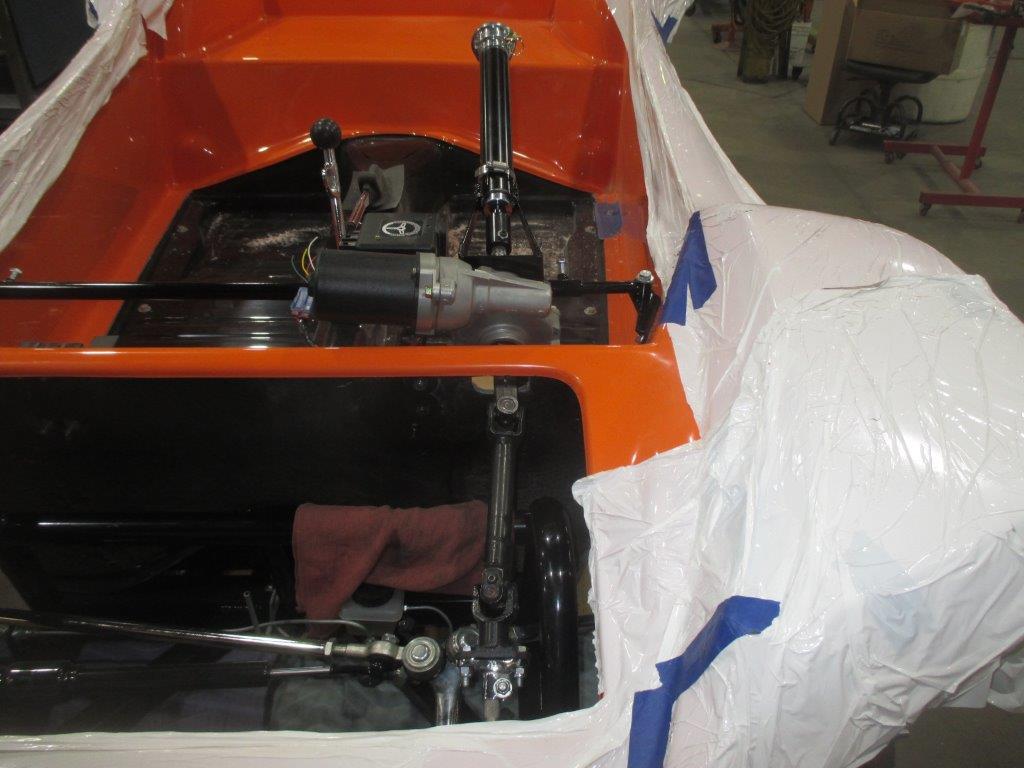
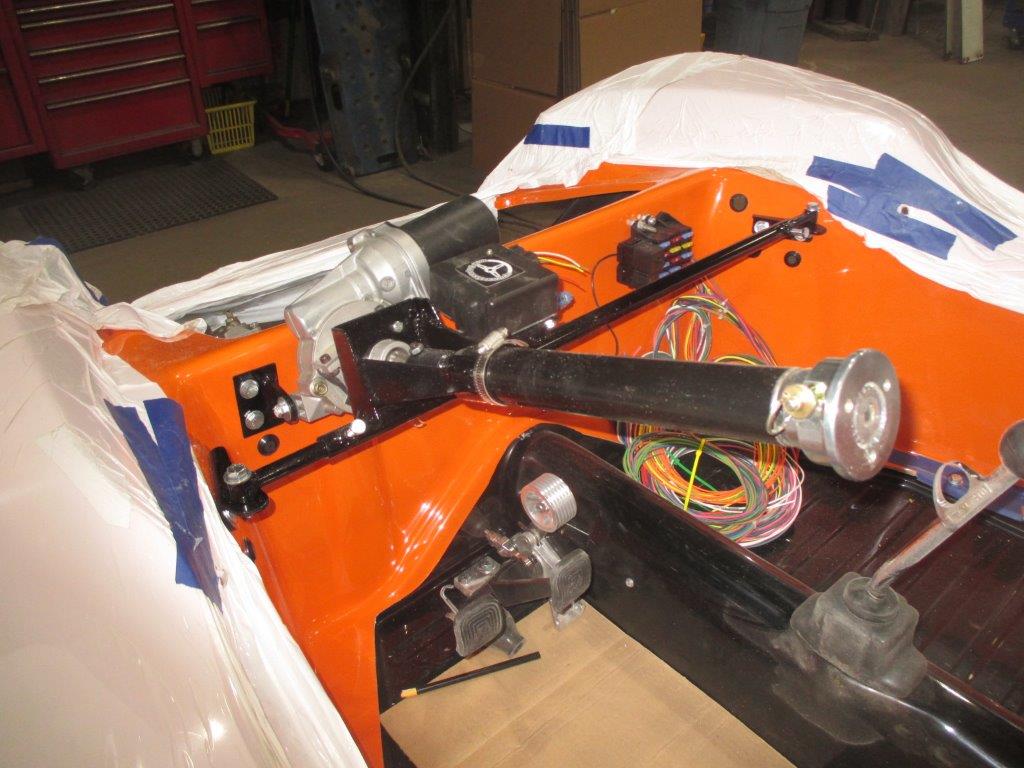
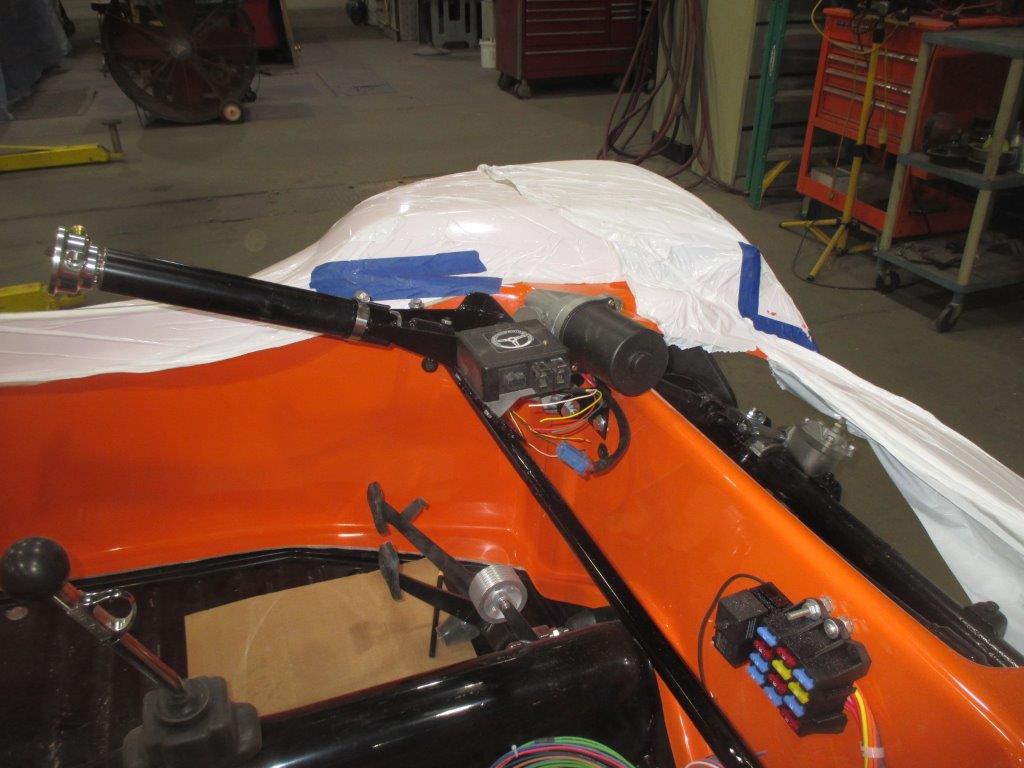
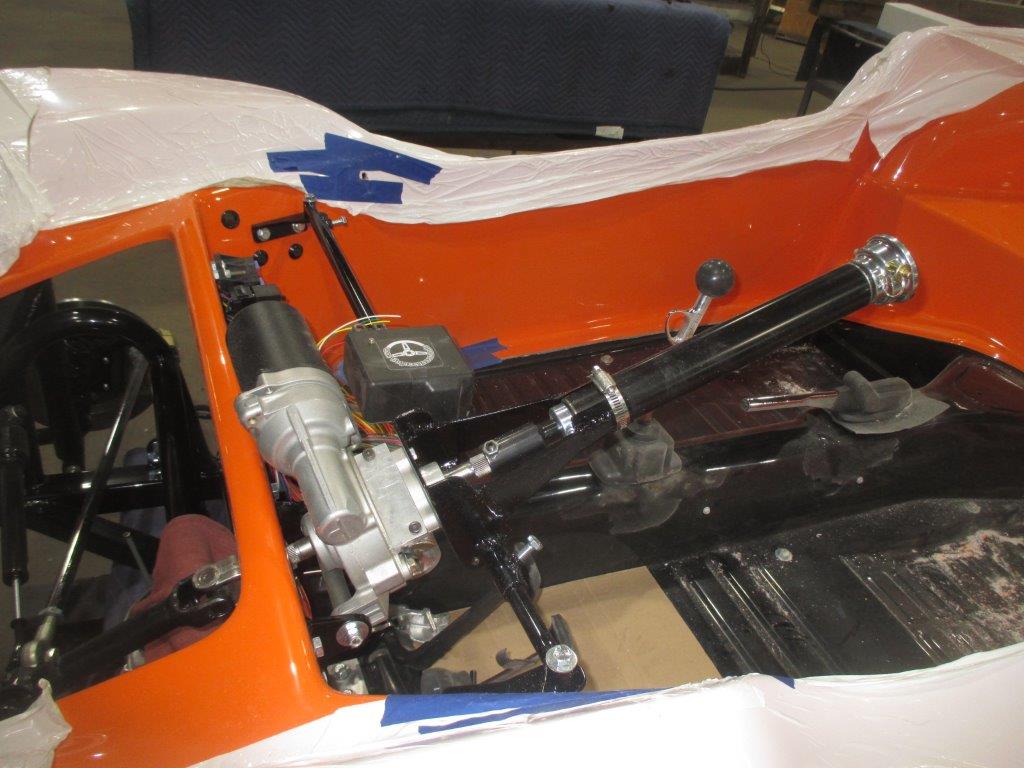
The electric power steering (EPS) system installation has now been successfully completed on the first prototype Berrien Genesis Buggy. This initial installation served as a development and fitment exercise to verify component layout, steering geometry, and overall system integration within the chassis.
At this stage, the remaining electrical work consists of routing the primary power feed directly to the battery. Because the EPS unit draws a relatively high current during operation—particularly at low vehicle speeds—it will be supplied by a dedicated power lead connected directly to the battery rather than routed through the standard fuse block. This ensures the steering system receives a stable voltage supply without overloading the vehicle’s accessory circuits. An appropriately rated inline fuse or circuit protection device will be incorporated into this feed to protect the system.
The driver-adjustable gain control knob will also be installed in the dashboard once the final dash panel is fitted. This control allows the operator to vary the amount of steering assist provided by the EPS unit. In practical terms, the driver can dial in lighter steering effort for low-speed maneuvering—such as parking or navigating tight trails—or reduce assist at higher speeds to maintain proper steering feel and road feedback.
From a mechanical standpoint, the prototype installation utilized a fixed intermediate steering shaft between the two universal joints. For the production version, this shaft will be upgraded to a 3/4-inch double-D intermediate shaft. The double-D design provides two important advantages. First, it allows for slight telescoping adjustment, accommodating variations in the distance between the firewall and the steering box that may occur due to manufacturing tolerances, body mounting differences, or chassis variations. Second, the double-D profile provides a positive mechanical engagement that prevents rotational slippage while still allowing for easier installation and alignment.
With the EPS unit mounted, steering linkage aligned, and the intermediate shaft configuration finalized, the system now integrates cleanly into the steering column assembly while maintaining proper steering geometry and structural integrity. Once the final electrical connections and dashboard controls are installed, the vehicle will be ready for operational testing to evaluate steering feel, assist levels, and long-term reliability under real driving conditions.
Please contact us for more information on this innovative approach.
– John Mickle